
What I Would Have Changed About the Astros’ 2025 Season
Innings, leverage, and the decisions that mattered before July

The Astros did not enter 2025 in crisis. They entered it competitive, coherent, and constrained. What they lacked was margin.
That made the season less about talent and more about timing. Not whether to spend, but when. Not who to trust, but how long to wait before the cost of waiting showed up somewhere else.
Craig Goldstein said it to me last week, almost in passing, after the Dubon trade, that the Astros are ‘cheap’. Not as a hot take, just as a description of how the roster was/is being managed under the CBT, at least before the trade deadline.
The word landed because it echoed a familiar pattern. The Dubón trade. The reaction to trading Kyle Tucker for Isaac Paredes and Cam Smith. The Ryan Pressly deal with Chicago. Each move was defensible on its own.
What’s actually happening is simpler. Jim Crane isn’t refusing to spend. He’s deferring the decision. And that deferral isn’t neutral. It shapes the roster before a single game is played.
Once a team is built under that constraint, it doesn’t get to behave unconstrained later without paying for it somewhere else. The Correa deadline deal showed this. The money eventually went out, but by then the roster had already been bent around restraint.
That cost doesn’t show up on the payroll line. It shows up in innings.
Astros starters averaged 5.29 innings per start, roughly league average, but did so with an 89-pitch average that quietly pushed work elsewhere. By season’s end, the bullpen had covered 649.1 innings, the tenth-most in baseball.
Josh Hader and Bryan Abreu were elite. That wasn’t the problem. The problem was volume. Three-out relievers only work when you don’t need them every night.
Half an inning per start doesn’t sound like much. Over a season, it’s the difference between leverage and overdraft.
Early in the season, the infield still held its shape. With Paredes, Walker, Peña, and Dubón, it converted ground balls into outs at an elite rate, allowing the pitching staff to chase contact without fear.
That alignment wasn’t cosmetic: it was load-bearing.
Framber Valdez and Hunter Brown lived on the ground. Their value depends on predictability. Once injuries hit and Altuve had to return to second base, the pitchers didn’t change. The infield did.
Cam Smith’s spring was real. He hit .342 with an OPS north of 1.000. The bat speed, the carry, the “aircraft carrier” frame — none of that was imagined.
Zack Dezenzo entered camp as coverage. Christian Walker arrived limited, and Dezenzo’s winter in Puerto Rico, including reps at first base and left field, mattered more than expected. Before his injury, Dezenzo appeared in 34 games and had moved into near-everyday usage, becoming the preferred option once roles narrowed into a platoon, particularly against right-handed pitching.
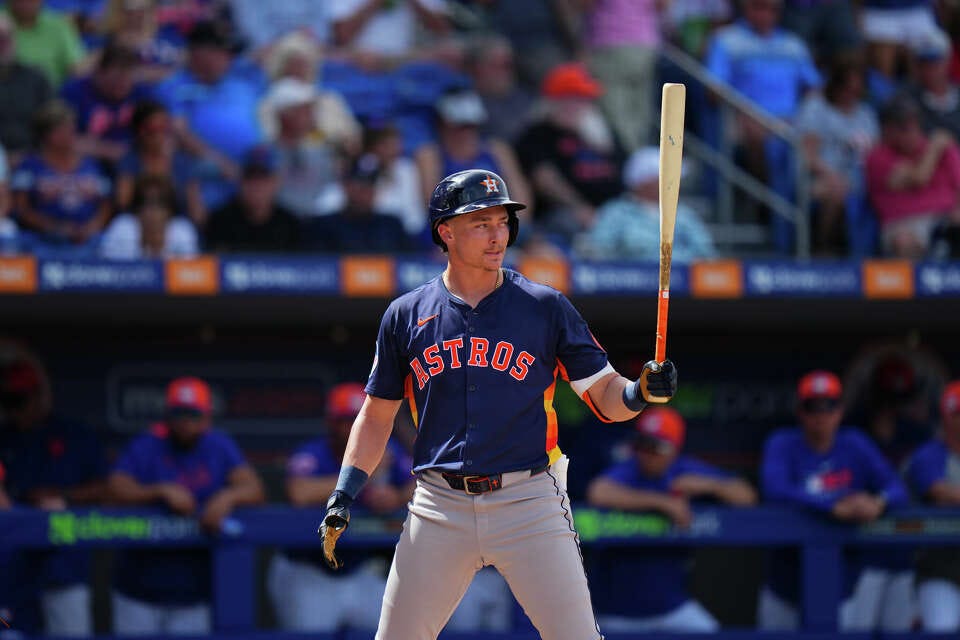
When Dezenzo went down, that buffer disappeared. Smith moved to full-time right field, and injuries to Peña and Parades pushed him into the leadoff spot.
As the margin narrowed, availability replaced health.
Jeremy Peña returned from a rib injury, rehabbed, then re-injured himself and missed the final stretch. Isaac Paredes came back from a hamstring strain as a DH and still had to run the bases.
By midseason, the season wasn’t being managed for health anymore. It was being managed for availability.
The Cease conversation only makes sense if you understand what had already been lost by the time it arrived.
Early in the season, a Cease-type arm would have made theoretical sense. High-variance, high-strikeout innings are valuable when the environment can absorb them.
By July, that environment no longer existed.
The infield had already lost its shape. The bullpen was already absorbing more innings than designed. The rotation was no longer handing over clean sixth innings.
Dylan Cease was never the problem. The price was. Preller’s asking price reflected his usual approach, and the Astros chose not to meet it, instead betting on Javier and Arrighetti.
By July 1, the bullpen workload already reflected the strain.
At that point, the need was clear. A leverage arm would have addressed the actual problem once short starts hardened roles.
By the deadline, that was already proven. The opportunity wasn’t theoretical anymore.
Once short starts became the norm, there was no pivot to a bullpen solution that matched the problem.
The rotation was built as if at least one health bet would hold.
That strain showed up most clearly in how injuries were managed once the roster tightened. The return-to-play process didn’t change, but the context did. Players were cleared to function, not to recover. Yordan Álvarez played through a compromised hand because the lineup needed his presence more than his health. Jeremy Peña returned from a rib injury, completed a rehab stint, and still wasn’t insulated enough to avoid re-injury. Jake Meyers was activated, sent back onto the field, and immediately pulled up again. Each case made sense in isolation. Together, they reflected a club operating without enough margin to let bodies actually settle.
Managing the CBT is defensible. Letting it dictate the shape of the pitching staff is not.
The Tucker trade didn’t just move talent. It redistributed certainty. On its own, that redistribution was manageable. It became far less manageable once pitching variance was left uninsulated.
The fix wasn’t prospects for stars. It was converting excess into innings. Players like Paredes or Meyers help a team survive a season. They don’t necessarily help it change shape.
The Astros didn’t lose 2025 because they misjudged talent. They lost it because they waited too long to change the roster they already had.
What I would have changed wasn’t who they believed in.
It was when they stopped protecting the margin and started spending it.
That’s the difference between competing and surviving.
No AI slop here, but AI is disrupting my industry (literally), and any support means the world right now: https://www.paypal.com/paypalme/hughan
Thanks for writing this, it clarifys a lot. Your analysis of their systemic constraint is brilliant and really connects with your earlier pieces. Spot on!