
Tatsuya Imai
A logical short term commitment made ahead of the next CBA

Hunter Brown has already shown he can be a cornerstone. His duel with Tarik Skubal in Detroit was a proof-of-concept. This is a hypothesis, but it would seem that Hunter Brown will thrive a little more when he isn’t forced to shoulder the rotation by himself, and history suggests Houston understands that dynamic. Naturally, Tatsuya Imanaga is a Scott Boras client. It’s the Astros’ special.
I woke up to this news in a text from a Dodgers fan. I cannot make that up.
Imai exhibited Houston spirit when electing not to join the Dodgers: "Of course, I’d enjoy playing alongside Ohtani, Yamamoto, and Sasak. Winning against a team like that and becoming a world champion would be the most valuable thing in my life. If anything, I'd rather take them down."
Breaking into the Japanese market is critical and is excellent for the Astros business-wise. Japan continues to produce high-end talent, and players gravitate toward organisations where others have succeeded. It only takes one player. The Astros haven’t had that player yet. If he goes out and deals, he becomes the proof of concept. As the team moves away from a West Coast focus, this is the opportunity to establish a global pipeline and show precisely what success looks like.
This is a measured bet, not a reclamation project. Geoff Pontes has described Tatsuya Imai as a starter-type arm: not overpowering every night, but deceptive, durable, and capable of taking a lineup deep into a game.
In that context, Imai represents something more stable than what sits behind Cristian Javier right now. As things stand, the 2026 rotation projects as Hunter Brown, Tatsuya Imai, Cristian Javier, followed by Mike Burrows, Ryan Weiss, and Spencer Arrighetti.
Historically, NPB-to-MLB translations have been noisy in part because the baseball itself changes. The NPB ball is slightly smaller and easier to grip. The higher seams that help pitches hold the grip, with higher seams that help pitches hold their shape, especially splitters with breaking balls. The MLB ball is much slicker, with lower seams, which tightens the margin and turns small misses into contact. Even when the pitch mix looks the same, the environment is not, and that is why the outcomes do not transfer cleanly.
Imai shows up with a straightforward starter mix. The fastball gets strikes. The slider finishes at-bats. The splitter shows up when hitters start leaning out over the plate.
In the context of the wider league, what makes this interesting, too, is that we just saw the World Series with Toronto bringing the splitter into the mix with almost every starter; this is not a pitch that the Astros have played around with in the past.
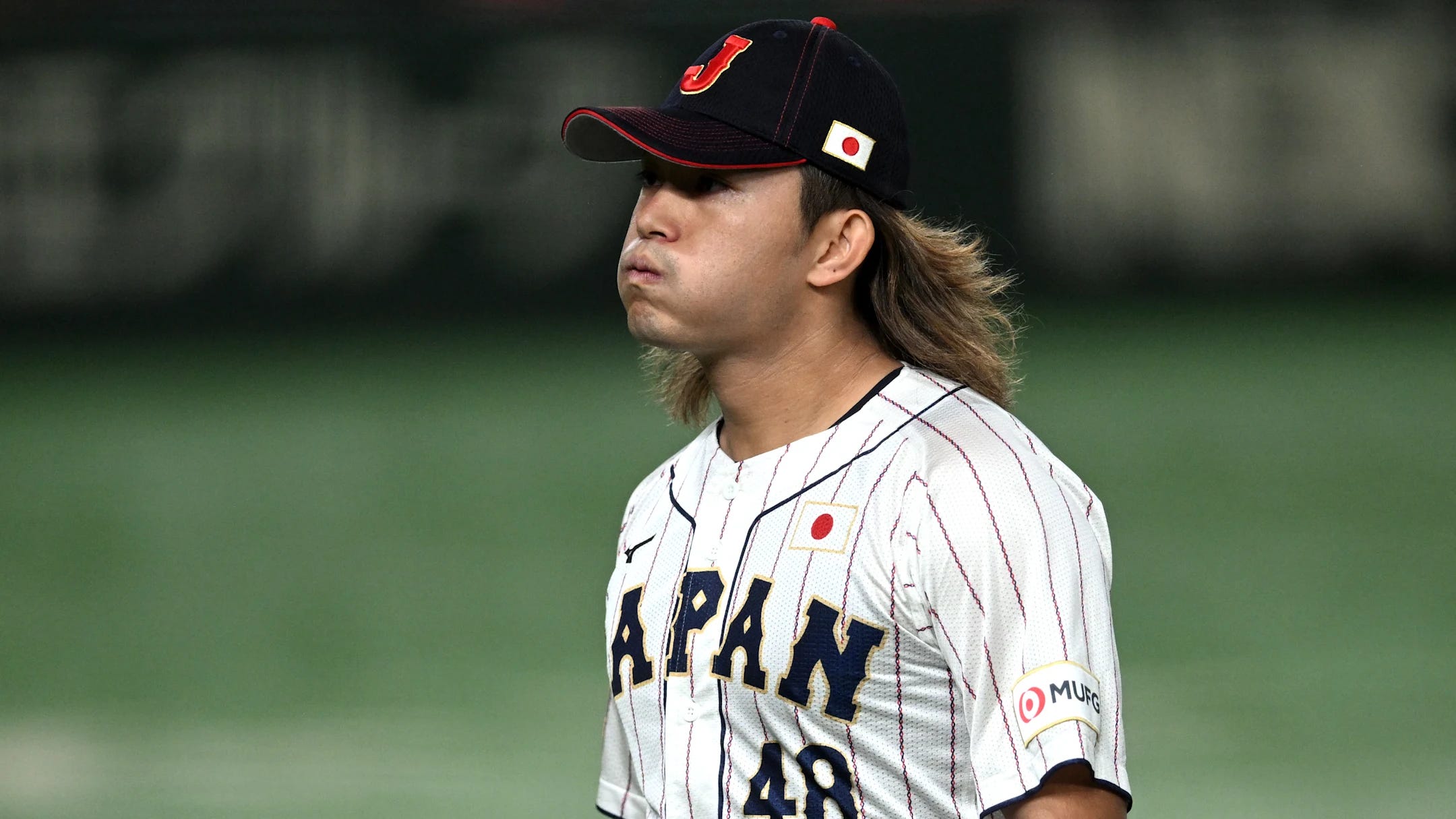
The numbers in NPB explain why hitters don’t get comfortable. The slider sits in the mid-to-high 80s and doesn’t behave the way hitters expect; it moves toward the barrel instead of away from it. It missed bats in Japan, but more importantly, it forced bad swings. The fastball averaged around 95 last season, and after he lowered his arm slot, his walk rate dropped sharply. He found more of the upper part of the zone and stayed there.
The jump still matters because mistakes get punished faster. In Japan, Imai could live in the zone without immediate damage. In the majors, fastballs over the plate get hit, and finish pitches have to end at-bats instead of extending them. What carries over is that he already works ahead, and that keeps counts from slipping.
He does repeat the same fastball or the same look. The velocity changes, the release point moves a bit, and the slider works because hitters can’t lock in. Last year’s command jump came from simplifying the delivery, not narrowing what he throws. Fewer walks with more variation is unusual, and it gives him a real chance to adjust as the league adjusts back.
There’s also the cost. Paying for this profile carries real risk, especially on a roster already carrying commitments at the top. A Framber Valdez contract would have been an educated bet: a more proven arm, an innings eater and a track record of absorbing mistakes. Imai isn’t that.
The contract makes the intent obvious. Three years and $54 million, fully guaranteed, isn’t depth — it’s a rotation job. An $18 million AAV is what you pay when you expect innings, run with the likelihood that the pitching lab will allow him to survive the league’s adjustments and keep the bullpen from bleeding innings in May and June.
If you enjoyed this piece, pitch! Please feel free to pledge and keep this writing going: https://www.paypal.com/paypalme/hughan