
Institutional inertia
Astros sustained clubhouse culture

Martín Maldonado joining Atlanta as a special assistant for major‑league operations wasn’t news so much as a reminder.
Players leave Houston every year. Coaches do too. The machine keeps running.
Continuity has never been about a single voice. It’s the product of repetition — how information circulates, how tasks get parcelled out, how work happens without anyone needing to announce it.
José Altuve has been the constant, but never the axis. His presence lowers the temperature. It doesn’t occupy the room.
His presence sets a precedent of selflessness. It doesn’t occupy the room. He leads with silence, the kind that shapes how people move around him. Even the small things: the music, the playlist drifting between Kyle Tucker and Mauricio Dubón, the way the room’s volume rises and falls — happen around him, not because of him. It’s a clubhouse that adjusts to his quiet, not one he tries to control.
For a long time, Alex Bregman filled the spaces Altuve didn’t. He organised. He talked. He enforced the small stuff. He even crossed departments — nudging pitchers, tightening routines, reinforcing standards that weren’t technically his to enforce. When he left, nothing collapsed. But something shifted.
Early last season, that thinning showed up in the margins. Yordan Álvarez drifted in and out with injuries. The team stayed afloat, but the edges softened. Cam Smith brought energy. Energy helped. It didn’t create structure.
With Dubón gone, the loss is not just the glove. It’s the next‑man‑up role in the room, the music, the ease, the small currents Dubón kept moving once Tucker stepped back.
What was missing wasn’t leadership. It was the gaps Bregman used to cover, including working with the pitching staff in the video room.
The downfall after 2023 wasn’t complicated. The Rangers had talent everywhere and almost no shared responsibility. Kevin Pillar said it outright: guys disappearing into their own routines, not much BP, not much stretching, not much of anything that builds a room. It was a clubhouse built on individual preparation rather than collective work. Seager and Semien set the tone for themselves, not for the group. So when the injuries hit and the bullpen collapsed, the team didn’t bend — it fractured. The selfishness wasn’t an attitude. It was structured. Everyone is pulling in their own direction, and no one is pulling the room together. A key reason Semian was traded to the Mets… which is another story.
Responsibility doesn’t shift upward when someone leaves. It spreads sideways. That’s why it’s never one person. It’s passed down, absorbed, repeated.
Carlos Correa didn’t return to fix that. He just slotted back into it. He did the quiet work that kept the room from loosening. You could see it in how the infield tightened and how the standards shifted with it.
The Astros’ clubhouse doesn’t just rely on continuity. It builds redundancy — overlapping habits, shared responsibilities, the quiet scaffolding that keeps the room the same even as the names change. Correa mentoring Peña in 2021 wasn’t an outlier; it was the system working as intended. It’s an apprenticeship, not a hierarchy.
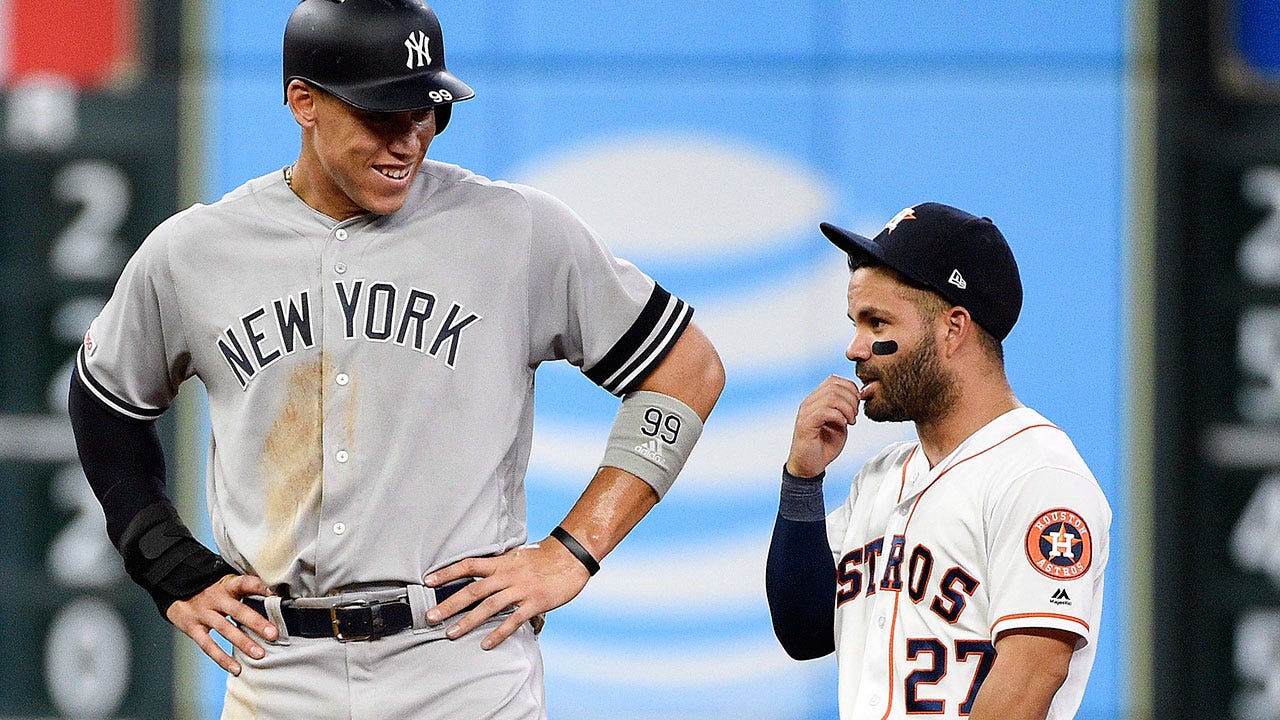
The Astros have never been a charisma‑driven clubhouse. They’re a function‑driven one. Contrast that with the Yankees, who had to formalise Aaron Judge’s authority as “captain” to bring him back when he was looking to leave. Altuve never needed a title. He leads the same way he plays — by handling the unglamorous things first.
That’s the part that tends to get misread. The Astros don’t depend on singular leaders. They rely on continuity of function, the same continuity that let Correa come home in 2026 without ceremony. His frustration in Anaheim made it obvious, as did the offseason meetings with Espada, that it never really stopped. When he returned, it wasn’t to reclaim anything. He fit because the structure he’d helped reinforce was still intact.
So Maldonado showing up in Atlanta matters less as a transaction than as a signal. Houston didn’t lose anything when he left. It held onto it long enough for others to absorb it.
It’s the same thing the opening pointed to — the machine running, the work passing sideways, the room staying itself even as the names change.
That’s institutional inertia, the thing that outlasts the people who built it.